Start with insurance — it's non-negotiable
The first question to ask any exterior cleaning company is whether they're insured, and specifically what type of coverage they carry. You want to see general liability insurance — not just a statement that they're "licensed and insured," but an actual certificate of insurance naming your property.
Why does this matter? Pressure washing and soft washing involve high-pressure equipment, cleaning chemicals, ladders, and work around your home's foundation, windows, landscaping, and siding. Accidents happen. A company without insurance means you absorb the cost of any damage to your property or injury on your premises.
Any legitimate, established company will have no problem emailing you a certificate of insurance before the job starts. If a company hesitates, can't produce one, or claims they "don't need it for small jobs," that's a clear signal to move on.
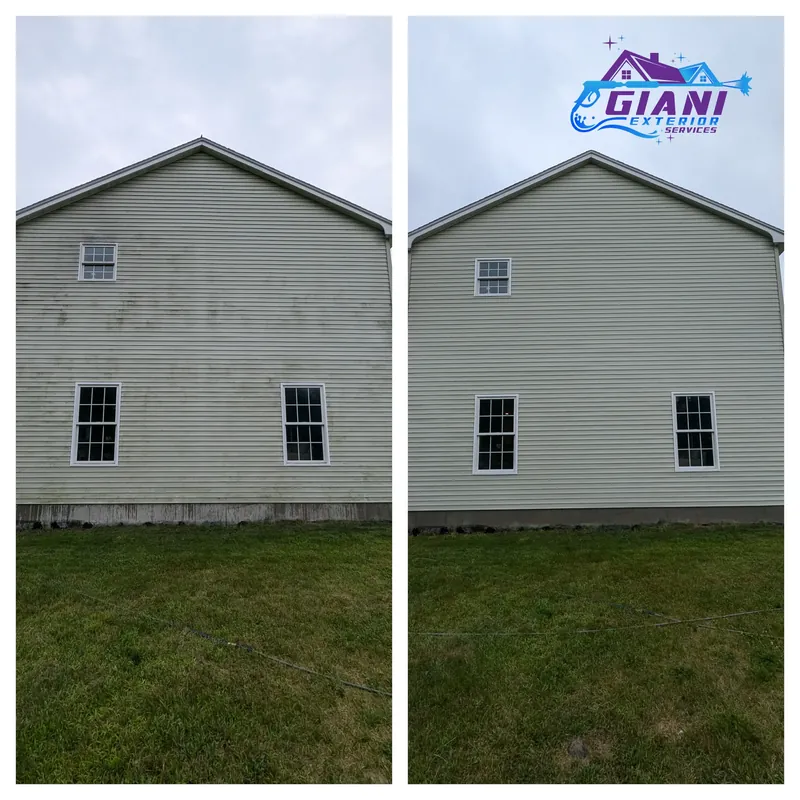
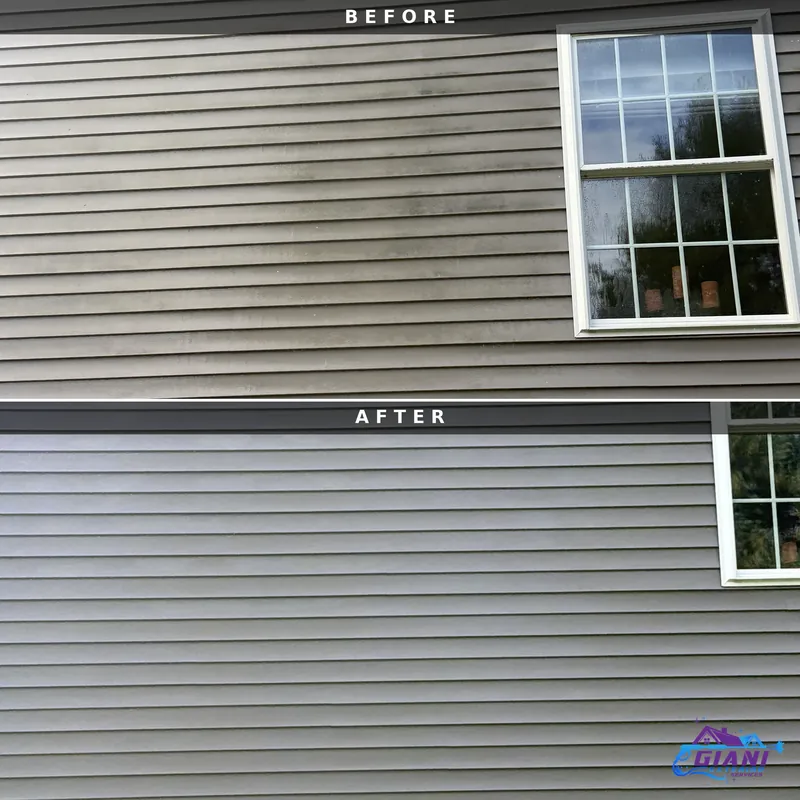
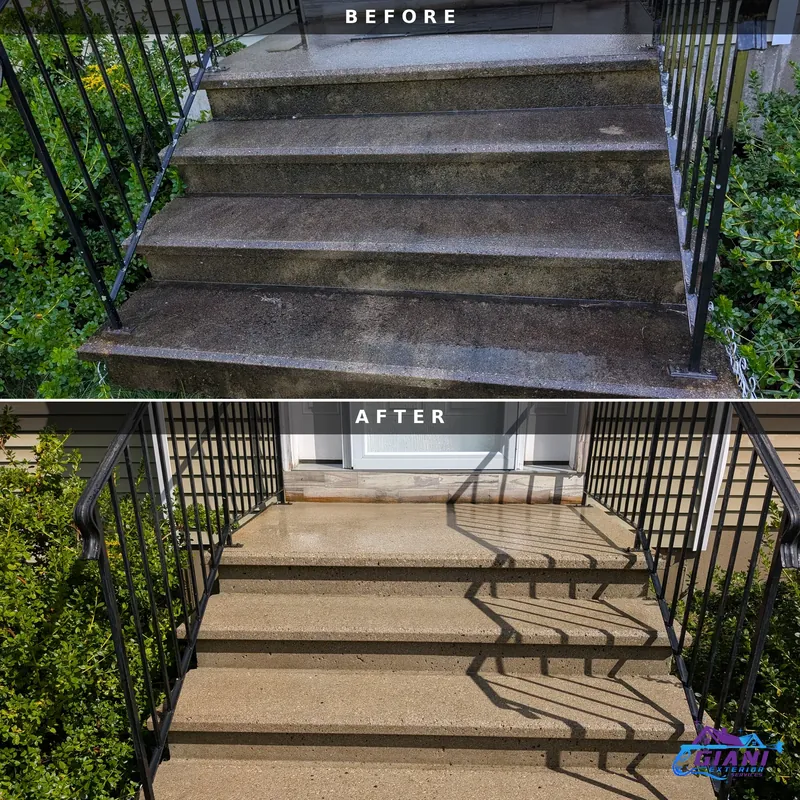
From our recent jobs
Understand the difference between soft washing and pressure washing
These terms are used interchangeably by a lot of companies, but they describe fundamentally different methods — and not all surfaces should be pressure washed.
Pressure washing uses high-pressure water (1,500–3,000+ PSI) to mechanically blast dirt and debris off surfaces. It's appropriate for concrete, brick, and some stone surfaces. It is NOT appropriate for asphalt roofs, most siding types, or wood decking — the pressure can crack vinyl, force water behind panels, strip paint, blast granules off shingles, and raise wood grain.
Soft washing uses low pressure (under 500 PSI, typically much lower) combined with professional cleaning solutions to kill and remove biological growth — algae, mold, mildew, lichen, and moss. The chemistry does the work; the water just applies and rinses it. Soft washing is the correct method for roofs, siding, gutters, fences, and most painted surfaces.
When you talk to a company, ask them specifically what method they use on roofs. If the answer is "pressure washing" or if they can't explain the difference, be cautious. Soft washing is the industry standard for roofing surfaces and is required by most shingle manufacturers to avoid voiding the warranty.
Check for real reviews — and look at how the company responds
Google reviews are your best resource. Look for companies with at least 20–30 reviews and a pattern of consistent quality comments. A few things worth paying attention to:
- Specificity — Reviews that describe the actual job ("they cleaned our roof on Shattuck Road") are more meaningful than generic five-star ratings.
- Recent reviews — A company that had great reviews three years ago may not be operating the same way today. Look for recent patterns, not just overall ratings.
- How they respond to negative reviews — Every company gets a bad review occasionally. What matters is whether they respond professionally and try to resolve the issue, or whether they get defensive and dismissive.
- Reviews on multiple platforms — Check Google, Facebook, and Nextdoor. A consistent reputation across platforms is more reliable than a high rating on any one of them.
Ask about their process, not just their price
The cheapest quote isn't always the best value. Before you focus on price, understand what the company is actually going to do. Some questions worth asking:
- What method do you use for roof cleaning? (Correct answer: soft washing)
- What cleaning solutions do you use, and are they biodegradable?
- Will you protect my landscaping before applying chemicals?
- Do you flush the downspouts when cleaning gutters?
- How long has the company been in business?
- Who will actually be doing the work — the owner, or a crew?
A company that can answer these questions clearly and specifically has usually done the work long enough to know what they're talking about. Vague or evasive answers are a warning sign.
When you get an estimate, ask what's included. Some companies quote only the main siding and exclude soffits, fascia, and foundation — surfaces that often have the worst buildup. Make sure you're comparing apples to apples when looking at prices.
Owner-operated vs. franchise vs. seasonal crew
This matters more than most people realize. There are three basic types of exterior cleaning operations:
Owner-operated small businesses — The owner is the one doing the work, or is directly supervising it. Quality tends to be high and consistent because their reputation is on the line with every job.
Franchises — A franchise brand with varying quality depending on the individual owner/operator. The brand name doesn't guarantee anything about the specific person running the local franchise.
Seasonal/startup crews — People who run pressure washing as a side business or bought equipment recently. Not inherently bad, but experience and knowledge vary significantly. Ask how long they've been doing this work.
None of these is automatically better or worse, but you should know which type you're dealing with. An owner-operated business with 3+ years of local reviews is usually a safer choice than a new operation with limited track record.
Get a written quote before work begins
Any reputable company should provide a clear quote — ideally in writing — that specifies exactly what's being cleaned, what method is being used, and the total price. This protects both parties and avoids misunderstandings about what's included.
Be cautious of companies that want to start work immediately without reviewing the property, or that provide verbal-only estimates. A walkthrough or photo review of the property before quoting is standard practice for any professional company.
What to expect from a well-run job
When a professional exterior cleaning company shows up, here's what a quality job looks like:
- They confirm the scope of work with you before starting
- They wet down and protect landscaping near chemical application areas
- They move methodically rather than rushing
- They clean up debris and rinse work areas when done
- They communicate with you when the job is complete — photos are a plus
- They're willing to come back and address anything that wasn't done to your satisfaction
About Giani Exterior Services
We're a small, owner-operated soft wash and pressure washing company based in Nottingham, NH. I started Giani after 12 years in the exterior cleaning industry and built the business around doing clean, consistent work and being straight with customers about what's needed and what it costs.
We're fully insured and happy to provide proof of insurance before any job. Free estimates, flat pricing, and a 100% satisfaction guarantee. If something isn't right when we're done, we come back and fix it.
Call (603) 416-1498 or request a free estimate online.
Free estimate — no obligation
We'll look at your property and give you a flat price before any work begins.
Request a free estimate